Stand Up Against Excessive British Film Censorship!
Sign Now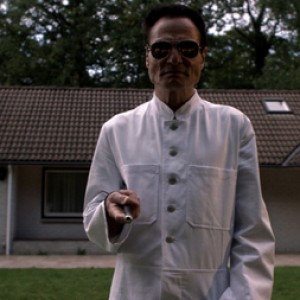
It has just been announced that Human Centipede 2 has been banned outright by the British Board of Film Classification (BBFC) - who thirty years ago were called the more accurate-sounding British Board of Film Classification. While it's true that fewer films are banned now than in the past, it's still too many that are cut or banned outright. The BBFC themselves claim that 'adults should be allowed to watch whatever they want' unless it's 'dangerous' or 'illegal' - but they act as judge and jury in making those often subjective decisions.
The justification for banning Human Centipede 2 is that it MAY contravene the Obscene Publications Act. Yet the advice the BBFC receive about this law is suspect - until the end of the 1990s, they maintained a blanket ban on hardcore porn for the same reason and it took a court case to prove this to be a lie.
Their claims that Human Centipede dehumanises the victims and sympathises with the victimiser could also be said of a film like Salo, which is passed uncut.
And the BBFC's subjective viewpoint isn't just inconsistent, it's constantly changing. In 2002, the Board went to court to defend cuts made to Last House on the Left. In 2008, it was passed uncut. In 1999, A Cat in the Brain was banned outright, with the claim that "the video was potentially harmful because of the influence it may have on the attitudes and behaviour of a significant proportion of its likely viewers, whatever classification it was given"; in 2003, it was released uncut. Did society really change that much in those few years to make these previously dangerous films now safe?
The BBFC may seem irrelevant in the age of the bit torrent, but that’s not true – their restrictions still stifle innovation in UK cinema by making it hard for filmmakers to release edgy or confrontational films, and by charging excessive, mandatory fees that make it hard for small, non-commercial films to make any money.
We believe that adults should be allowed to watch any work of fiction that features consenting adults, and that bans should only be enforced for films that clearly break existing laws (ie child and animal abuse). There has never been any independent evidence to show that watching films has ever directly influenced anyone to commit violent or sexual crimes, let alone that they can corrupt a whole nation. It's time that Nanny cut the apron strings and the BBFC finally move to their stated position of classifying, not censoring, and also that films should be allowed to be released ‘unrated’ – with all the distribution restrictions that such a category would invariably bring. People should have a right to choose, not to be told that other people have made that choice for them.
Sign The Petition
 Continue with Google
OR
If you already have an account please sign in, otherwise register an account for free then sign the petition filling the fields below.
Email and password will be your account data, you will be able to sign other petitions after logging in.
Shoutbox
Goal
83 signatures
Goal: 1,000,000
Latest Signatures
12 December 2012
83.
Jonathan Halhead Halhead
|
3 November 2012
5 July 2012
13 January 2012
15 October 2011
1 October 2011
13 September 2011
12 September 2011
11 September 2011
9 September 2011
9 September 2011
7 September 2011
7 September 2011
7 September 2011
70.
Matt Eccles
|
7 September 2011
7 September 2011
6 September 2011
6 September 2011
6 September 2011
6 September 2011
25 August 2011
24 August 2011
23 August 2011
18 August 2011
17 August 2011
Tags
No tags
Embed Codes
direct link
link for html
link for forum without title
link for forum with title
