Triclosan: Be Gone!
Sign Now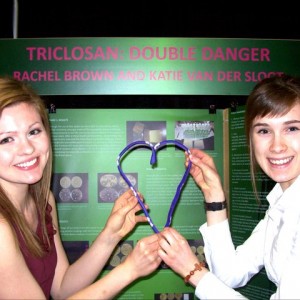
In recent years antibacterial products have flooded the market from soaps and cosmetics to consumer items ranging from children’s toys to hygiene products. Triclosan, the broad-spectrum antimicrobial agent, is the synthetic additive present in these products. Through our first experimental phases we can conclude that resistant bacteria can be found throughout the environment, particularly in water samples. We believe this can be linked to exposure to Triclosan. Through the use of titer plates, we were able to successfully induce partial resistance amongst some of the susceptible bacteria. Using the Kirby-Bauer method cross-resistance was verified when the induced bacteria were exposed to Triclosan and several common antibiotics. As well, susceptible bacteria can become Triclosan and antibiotic resistant through transformation. Finally, various human samples contained strong cross-resistance to antibiotics and Triclosan. This is of serious concern for it may be affecting a large percentage of the consumer population leading to the housing and incubation of resistant superbugs within the human body. Our findings left us with the firm desire to share them with others.
In the beginning, we set out to make aware our closest circle of influences by contacting family relatives, and friends encouraging all to spread the word as well. Then, we expanded our vision by visiting local coffee shops, galleries, and institutions, distributing public awareness posters and pamphlets. After receiving numerous e-mails from health-conscious citizens we were compelled to submit a youtube video attempting to reach out to a wider berth of people. So with the help of our outstanding tech-savvy colleague, created a short video entitled, "We are all making Superbugs!" which attained over 600 hits. We then were fortunate enough to share our discoveries with judges, public, and peers through presentations, newspaper articles, radio/television interviews, and science fair competitions. At nationals, the project received bronze and the UNESCO Peace and Development Award, for it's universal applicability addressing sustainability and science education. This past summer we represented Canada although with other members from Team Canada at the Expo-Sciences International in Slovakia; granting us an opportunity to bring forth a rising issue regarding population health with a truly global audience. Finally, in collaboration with Ellen Dashwood from David Suzuki Foundation to create a blog, "Coming clean on the risks of antibacterial products," which is currently featured on the public website.
We are hopeful that we have made a difference through sharing with others our concerns for the safety of Anti-bacterial products, and we can only hope that our passion can be translated into actions. People can help encourage others; joining together to support the banning of this chemical once and for all!
RESEARCH
i. Chemical Structure and Properties
Triclosan is an organic polychloro phenoxy phenol compound containing antibacterial and antifungal properties representative of both ethers and phenols. It is a white, powdered organic compound soluble in ethanol, methanol, diethyl ether and strong base solutions. Other names include: Microban, Irgasan DP-300, Lexol 300, Ster-Zac, Cloxifenolum, and Biofresh.
ii. Uses
Originally, use of the chemical was mostly confined to the health care industry in use of surgical scrubs and disinfectants. However over the past decade there has been a rapid increase in the use of Triclosan-containing products. Triclosan is contained in a multitude of everyday items such as soaps, deodorants, toothpaste, shaving creams, mouth washes, and cleaning supplies. In addition numerous consumer products such as kitchen utensils, toys, bedding, socks, trash bags and makeup also contain antibacterial agents. To emphasize the extent to which Triclosan is present in consumer products, a study was conducted by Eli Perencevich, M.D. in 2000. They concluded that of all soaps on the market, 45% contained some antibacterial agent with nearly half of all commercial soaps containing Triclosan specifically.
iii. Mechanisms of Action
Fatty acids are necessary for reproducing and building cell membranes. Triclosan works by preventing bacteria from synthesizing this fatty acid by blocking the active site of enoyl-acyl carrier protein reductase enzyme (ENR), which is an essential enzyme for fatty acid production. As well, because of Triclosan’s phenol characteristics, only a small amount is needed for powerful antibiotic action.
iv. Resistance Concerns
Bacterial species can gain low-level resistance to Triclosan due to FabI (a gene encoded on ENR proteins) mutations, which decrease Triclosan’s ability to bind to ENR enzymes and kill the bacteria. Triclosan does not directly cause a mutation in bacteria. Through killing susceptible bacteria it creates an environment where mutated resistant bacteria are more likely to survive and reproduce. In addition, coupled with the ever growing amount of consumer products containing Triclosan, bacteria’s constant exposure to it will lead to higher tolerance within resistant strains thus enabling resistant bacteria to become all the more plentiful and increasingly resistant. There are higher chances of the development of resistance because more bacteria and more varieties of bacteria are being constantly exposed. Also, constant exposure to low concentrations of Triclosan in sewers, drains, and waterways increase the odds for bacterial resistance. This is worrisome as Triclosan’s mode of action in forming resistant bacteria allows for bacterial cross-resistance with both Triclosan and antibiotics. Superbugs can occur from this cross-resistance as bacteria exposed only to Triclosan can, through transformation, become resistant also to antibiotics.
v. Health Concerns
Triclosan has recently been proven to be present in human samples. For instance, a 2002 Swedish study found high levels of Triclosan in three out of five human milk samples. As well, scientists of US Centers for Disease Control and Prevention detected Triclosan in the urine of nearly 75% of the test group, consisting of peoples age six years and older. These results indicate that Triclosan does in fact become absorbed and/or ingested into the human body. There are also concerns over Triclosan’s possible interference with the body’s thyroid hormones. The symptoms include low body temperature and depression. Additionally, another issue arises with the overuse of Triclosan containing chemicals in everyday life and households. That being the possible connection to allergies, asthma and eczema in people brought up in more sterile and over-hygienic environments. This could be a serious concern as there have been reports of contact dermatitis or skin irritation resulting from exposure to Triclosan-containing products.
vi. Environmental Concerns
Consumer products containing Triclosan are primarily disposed of in residential drainage systems. Unfortunately though, because of Triclosan’s extreme stability as a compound, wastewater treatment plants are unable to break the chemical down. This results in large amounts of Triclosan being emitted into the waterways. For example, in a Geological Survey study of varying wastewater contaminants in U.S. streams, Triclosan was one of the most frequently detected organic compounds and tested at some of the highest concentrations. This is a serious issue, Triclosan has been found to be highly toxic to algae, which affects and acts as base of the entire aquatic ecosystem. Furthermore in a study conducted by Swedish Researchers, high levels of Triclosan were found in the bile of fish located downstream from sewage treatment plants; indicating the chemicals’ presence in a variety of living organisms.
vii. Effectiveness
Because Triclosan use as an antibacterial agent in consumer products continues to increase, it can be assumed that sufficient and extensive research on the chemical agent has occurred. This however is not the case. Moreover, in accordance to the American Medical Association no solid data exists to support the efficiency or usefulness of the products and “…it may be prudent to avoid the use of antimicrobial agents in consumer products.” The FDA and EPA are responsible for the regulation of anti-microbial products. Unfortunately, they have done very little to warn consumers of the detrimental health and environmental effects of Triclosan. This leaves North American consumers blindly unaware of the possible risks they face when they purchase and use antimicrobial products. Europe, on the other hand has approached the chemical with much more caution. The public is informed on the potential harmful environmental and domestic effects associated with routine use of Triclosan containing products.
viii. Alternatives
In the beginning Triclosan use in the health care industry was a vital and important resource pertaining to sanitation and cleanliness. Now it appears to be contributing to the dangerous development of superbugs. Long before modern chemicals became available the go-to cleaners were bleach or ammonia. Hydrogen peroxide is an environmentally safe alternative to chlorine bleach but is a strong oxidizing agent and has to be used carefully. Ammonia is a very good cleaning agent but is very toxic and can’t be used near, or mixed with, chlorine bleach. There are many environmentally friendly cleaning products available today but safe household cleaners can still be made from baking soda, vinegar, lemon and borax. In the end, the most effective way to prevent infection and maintain a healthy hygienic environment is simply by use of pure soap and water.
Help us ban this harmful chemical once and for all!
Sign The Petition
 Continue with Google
OR
If you already have an account please sign in, otherwise register an account for free then sign the petition filling the fields below.
Email and password will be your account data, you will be able to sign other petitions after logging in.
Shoutbox
Goal
34 signatures
Goal: 100,000
Latest Signatures
16 April 2012
19 February 2012
19 February 2012
23 December 2011
10 December 2011
20 November 2011
20 November 2011
19 November 2011
19 November 2011
19 November 2011
19 November 2011
3 November 2011
2 November 2011
31 October 2011
29 October 2011
28 October 2011
28 October 2011
27 October 2011
27 October 2011
27 October 2011
25 October 2011
22 October 2011
21 October 2011
21 October 2011
21 October 2011
Tags
No tags
Embed Codes
direct link
link for html
link for forum without title
link for forum with title
